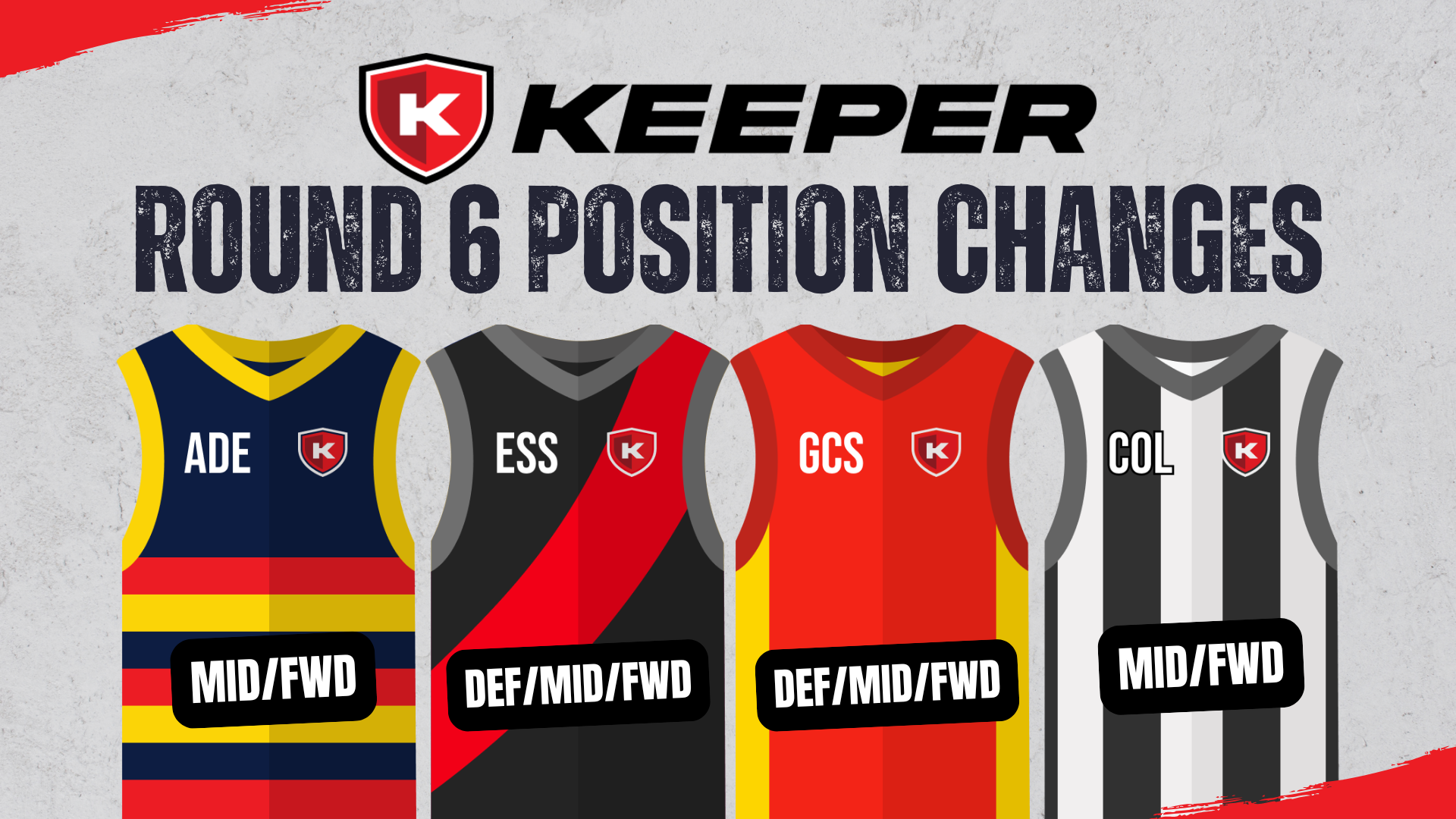
Keeper coaches, the moment you’ve been waiting for has finally arrived – Keeper’s next round of position changes are here!
Keeper is revolutionizing how player positions are managed with a systematic approach designed specifically for draft fantasy leagues. The position updates will follow rounds 3, 6, 9, 12, 15, and 18.

These regular position updates create exciting new strategic dimensions for Keeper coaches. Players who gain additional positions instantly become more valuable draft assets, while for savvy coaches, spotting these trends early could give you a significant advantage over your competition.
Caleb Windsor stands out as the most important addition here. While his scores haven’t been start-worthy this season, his historical performance suggests significant potential. For dynasty and keeper league coaches, this transforms Windsor from a potential delisting candidate to a valuable hold. Having a young talent who can slot into your defensive line when needed adds crucial flexibility to your draft side. A handy gain if he can start to elevate those scores back into the 70’s.
Nic Martin emerges as the crown jewel of this update. After gaining forward status in the Round 3 position changes, he now adds midfielder to his credentials. This makes Martin the ultimate triple-position swingman, giving owners unprecedented flexibility to play matchups across three different lines based on fixtures and opponents.
James Peatling missed last week through suspension, but has demonstrated his scoring potential with four 70+ scores, including a ceiling of 112. This position gain turns him from a borderline starter in the midfield to a valuable forward asset that demands to be placed on the ground.
Levi Ashcroft has emerged as this year’s standout rookie. Every season we seemingly get a first-year player who becomes genuinely start-worthy, and Ashcroft fills that role as a forward. With three scores over 82 (including a 94) and none below 58, he provides reliable production in a forward line where consistent 70+ scorers are scarce. I thought he’d get it after round 3, but thrilled to see him finally get FWD status.
Jordan De Goey brings a history of 90+ averages, though injuries have limited his centre bounce attendance this year. His increased forward time has earned him this position gain, and if he can regain consistency and health, his midfield role should expand—boosting both his scoring floor and ceiling. This represents tremendous upside for coaches if we can see this premiership Pie return back to his peak.
Sam Flanders started slowly due to injury and has struggled to maintain his midfield role, resulting in inconsistent scoring. While he may need an injury to others to regain a more favorable role, his newly awarded triple-position flexibility allows owners to deploy him optimally as either a defender, midfielder or forward, ensuring you can max your bench players’ potential based on matchups of any given week.
To find out more about Keepers selection process click here.
Nick Daicos has made an indelible mark on the AFL landscape in just two short years, showcasing a career trajectory many veterans would envy. From clinching the Rising Star award to being adorned with an Anzac Day medal, earning his inaugural All-Australian honours, and even securing a premiership medal, Daicos’s contributions to the game have been spectacular.
His remarkable journey, however, was marred by a late-season injury, which arguably was the only thing standing between him and the prestigious 2023 Brownlow Medal.
Nick Daicos, in just his second AFL season, has rapidly become one of fantasy football’s most valuable assets, especially in AFLFantasy and SuperCoach formats. In AFLFantasy, he notched an impressive average of 108.8 points per game, with 14 games scoring over 100 points. Six of these games saw him surpass the 120-point mark, including a standout performance that earned him a career-high score of 150.
Of equal importance, he posted only two scores below 80 points throughout the season, one of which came in a challenging match where he was heavily tagged by Finn Maginness and also suffered an injury. Despite these hurdles, Daicos finished the season as the top defender by average, outperforming notable midfielders like Connor Rozee, Caleb Serong, and Christian Petracca.
In the SuperCoach, Daicos’s performance was equally stellar, with an average score of 117 points per game. He tallied 15 games with scores in the triple digits, cementing his position as the top defender by average and ranking 7th overall, above esteemed players such as Jordan Dawson, Rowan Marshall, and Tom Liberatore. Even when faced with tags and injuries, Daicos’s remarkable consistency and scoring ability underscore his immense value in fantasy leagues and his pivotal role as a defender in fantasy lineups.
Nick Daicos’s transition to spending more time in the midfield has significantly boosted the value of his fantasy football. Analyzing his performance, it’s evident that his scoring potential escalates with increased midfield attendance. Specifically, in the 12 matches where Daicos attended at least 35% of centre bounces, his AFLFantasy average soared to 107.5, while in SuperCoach, it reached 112.4. This distinction becomes even more pronounced in games where his centre bounce attendance spiked to 65% or more, showcasing averages of 116 in AFLFantasy and an impressive 121.8 in SuperCoach. Such statistics underline Daicos’s burgeoning prowess as he delves deeper into midfield roles and hints at a ceiling that has yet to be fully explored.
Daicos’s ability to elevate his game further into the midfield realm, combined with his already impressive stats in only his second season, sets the stage for what could be an extraordinary career.
Navigating the decision to start or target Nick Daicos as an upgrade hinges on several key narratives that fantasy football coaches must consider. The infamous Finn Maginness tag game in Round 4, compounded by an injury to Daicos, is a cautionary tale. While some in the fantasy community might be tempted to exclude this outlier to boost Daicos’s averages to 112 in AFLFantasy and 120 in SuperCoach, it’s a reminder of the inherent risks and the complexity of relying too heavily on selective data to fit a narrative.
Opting to wait and target Daicos as an upgrade revolves around strategic considerations, including:
The Early Bye Round: Collingwood’s absence in Round 5 offers a strategic pause, allowing coaches to assess Daicos’s early-season form and tag susceptibility.
Tagging Threats: Beyond the Finn Maginness game, the potential for Willem Drew’s tag in Round 6 looms, hinting at challenging matchups that could affect Daicos’s scoring and, by extension, his price.
Price Dynamics: The combined effect of these early challenges presents a scenario where Daicos might be acquired at a more favourable price point post-bye, aligning with a strategy to maximize value from premium selections.
Conversely, the argument for starting with Daicos underscores his unparalleled status in fantasy backlines, characterized by:
Dominance and Potential: As the preeminent defender in fantasy, Daicos’s blend of skill, role, and scoring potential sets him apart, suggesting that early investment could secure a cornerstone for fantasy defences.
Preparation and Adaptation: The Magpies’ preseason focus on mitigating the tag’s impact reflects a strategic emphasis on enhancing Daicos’s resilience and scoring consistency, even under targeted pressure.
Natural Evolution and Role Expansion: Daicos’s ongoing development and the prospect of increased midfield time provide a compelling narrative for improved scoring, underpinning his appeal as a starting option.
The equilibrium between starting Daicos and planning him as an upgrade target epitomizes the strategic intricacies of fantasy football. Coaches must weigh the immediate advantages of securing his high ceiling from the outset against a mid-season upgrade’s tactical flexibility and potential value. This decision is further complicated by Collingwood’s early fixtures against GWS, Sydney, St Kilda, and Brisbane, with Daicos’s performances in these matches poised to influence strategic directions profoundly.
Ultimately, whether to integrate Daicos from Round 1 or strategically pivot to him post-bye encapsulates the dynamic challenge of fantasy football management. Each path offers distinct advantages and risks, underscoring the necessity of adaptive strategy and keen market observation to optimize fantasy outcomes.
In AFLFantasy and SuperCoach drafts, Nick Daicos stands as the premier defender, warranting consideration as the very first pick on draft day. His exceptional output, combined with a unique blend of reliability and upside, firmly establishes him atop the defender rankings. As fantasy coaches strategize for the draft, securing Daicos could be pivotal, marking him as a cornerstone for any successful fantasy football campaign.
JOIN THE CONVERSATION
Do you believe he is fantasy relevant? Will you be starting with him? Have your say on our Facebook, Twitter or Instagram.
WANT EARLY ACCESS?
Want access 24 hours early to the 50 Most Relevant podcasts? Join our Patreon and get ahead of the crowd here.
It happens in every season! A player comes from the clouds with a drastic role change. They present the SuperCoach and AFLFantasy community with supreme value and premium scoring. But entering the 2024 season, plenty has changed around Sam Flanders and his Gold Coast Suns. Can this former first-round selection pick up from where he left last year?
WHY IS HE RELEVANT?
Sam Flanders’ evolution into a consistent and explosive mid-forward has been remarkable. With clean hands and a knack for game-changing plays, his 2023 season saw him elevate his performance to new heights. His output from round 15 onwards was particularly impressive, where he showcased flashes of brilliance and sustained excellence.
In AFLFantasy, he notched an average of 89.6, with six scores reaching the century mark, including a standout 146. His SuperCoach performance was similarly impressive, cementing him as a top-ten forward with an 88.4 average. However, the latter part of the season truly highlighted his potential. During the final ten rounds, Flanders averaged 29 disposals, 5.7 marks, and 3.2 tackles per game, with a 38% share of centre bounce attendances. This period saw him average 105 in AFLFantasy and 106.1 in SuperCoach, underscoring his ability to deliver high scores consistently.
This uptick in performance during the crucial final stretch of the season provides a compelling narrative for Flanders as we look ahead. The forward line, often challenging for fantasy coaches to navigate due to inconsistency and a lack of premium options, suddenly seems less daunting with Flanders in the mix. If he can extend this scoring trend throughout the upcoming season, Flanders will transition from an attractive option to an indispensable asset in fantasy teams. Given the landscape of topline forwards, Flanders’ potential for sustained high performance makes him a standout candidate for a must-own status in the forward line.
Sam Flanders’ journey with the Gold Coast Suns is at a fascinating juncture, especially with the coaching change bringing Damien Hardwick at the helm. This transition is anticipated to mark a significant shift in Flanders’ role and the Suns’ overall game style, which has historically seen half-backs and inside midfielders thrive under Hardwick’s coaching philosophy. Yet, traditionally, wings and high half-forwards under Hardwick have seen a limitation on their scoring ceiling, raising questions about where Flanders might fit in this new setup and how it could impact his fantasy football relevance.
The Suns’ midfield is expected to revolve around Matt Rowell, Noah Anderson, and Touk Miller, positioning Flanders in a competition for the fourth and fifth midfield spots alongside Bailey Humphrey. This battle for midfield minutes will be crucial in determining Flanders’ fantasy output, making the preseason and early rounds vital for coaches to monitor his role closely.
During a notable 10-game stretch, Flanders impressed with an average of 5.7 marks per game, placing him among a select group of AFL players who excel in this area. However, with only a handful of non-defenders achieving similar mark tallies, the challenge for Flanders lies in maintaining this aspect of his game amidst potential role changes under Hardwick’s system.
The Suns’ Round 3 bye offers a unique strategic element for fantasy coaches contemplating Flanders’ selection. With the opportunity to assess his performance in the season opener before making a selection decision, coaches are presented with a low-risk option to gauge his role and scoring potential. Flanders’ current high ownership in fantasy leagues, as the most selected forward not classified as a rookie, underscores the community’s optimism about his value proposition.
Fantasy coaches face a nuanced decision in deciding whether to start or fade Flanders. Starting him offers the chance to capitalize on a potentially undervalued asset from the get-go, with the option to pivot away should his role not materialize as hoped. Conversely, waiting and observing Flanders’ role and output in the early rounds can provide valuable insights, allowing for a more informed selection post-bye, albeit at the risk of missing out on early scoring surges.
The key question is this. What does Sam Flanders need to do this preseason to make you start or fade selecting him? Is it a preseason-specific role in the practice games? Is it a comment from the coaching staff at a press conference? Is it a balance of how the Suns structure up or a game style? It could be these or many other indicators. But the key criteria you need to ask yourself is that question. What must I see to select or fade him? Build that list, then check things off accordingly over the coming weeks.
In the landscape of fantasy football drafts, where forwards with a high scoring ceiling are at a premium, Sam Flanders presents an intriguing option as an F1. The scarcity at the top end of forward options elevates his value, making him a compelling pick for those looking to secure a solid forward early in their draft. Given the uncertainties around role changes under new coaching and how this impacts Flanders’ scoring potential, cautious optimism is the prevailing sentiment.
If you’re bullish on Flanders stepping up as a consistent scoring forward under Damien Hardwick’s system, securing him as your F1 could be a strategic move. However, considering the potential volatility in his role and output, it might be prudent to wait until at least the 4th round before drafting him. This approach allows you to build a foundation with players in less volatile positions while securing a forward with upside. The thinness at the top end among forwards makes Flanders’ appeal as an F1 evident. However, drafting him before the 4th round may carry a risk that requires a balance of confidence in his potential and strategic draft planning.
JOIN THE CONVERSATION
Do you believe he is fantasy relevant? Will you be starting with him? Have your say on our Facebook, Twitter or Instagram.
WANT EARLY ACCESS?
Want access 24 hours early to the 50 Most Relevant podcasts? Join our Patreon and get ahead of the crowd here.
Jackson Macrae has been a staple in our SuperCoach & AFLFantasy sides for over a decade. While 2023 was a topsy-turvy season both in scoring & role consistency, he enters into 2024 with DPP and the potential of being the top forward in the game.
WHY IS HE RELEVANT?
Jackson Macrae has been a fixture in our SuperCoach and AFLFantasy teams for almost a decade, consistently delivering premium-level performance since his breakout in 2014. His fantasy football journey is marked by several seasons where he averaged over 120 points, positioning him as a cornerstone of fantasy midfields across the league.
In 2023, Macrae transitioned into a forward role in AFLFantasy, posting an average of 91.8, with 8 tons, including two scores over 120, and finishing the season as the top-ranked forward by average and third for total points. His SuperCoach performance was similarly impressive, with an average of 99.9, 11 tons, 5 of which exceeded 120 points, securing his position as the foremost forward by average and fourth for total points.
Despite a year many viewed with disappointment, primarily due to expectations of Macrae returning to an average above 110, his 2023 season still demonstrated significant scoring potential. A notable stretch between rounds 10-13 saw him average 118.25 in AFLFantasy and an even more impressive 129.5 in SuperCoach, including several scores over 140.
This performance dispels the myth that Macrae’s high scoring solely depends on his Centre Bounce Attendances (CBAs). For instance, in round 10 against Adelaide with only 20% CBA, Macrae scored 117 in AFLFantasy and 140 in SuperCoach. Similar performances in rounds 12 and 13, with varying degrees of midfield attendance, further underscore his ability to contribute significantly on the scoreboard, regardless of his role on the field.
A critical aspect of fantasy football scoring, particularly for midfielders, hinges on their ability to accumulate points through stoppage and transition play. For a midfielder to excel in fantasy scoring, they must be adept at influencing the game in these two crucial areas. Stoppage points are garnered from clearances, tackles, and contested possessions at stoppages, like centre bounces and boundary throw-ins. These moments allow midfielders to demonstrate their contested ball skills and contribute significantly to their fantasy scores.
Transition points, on the other hand, are earned through actions that occur as the play moves from one end of the field to the other, such as effective disposals, marks, and score involvements during open play. This facet of the game emphasizes a player’s ability to use the ball efficiently, make impactful decisions, and contribute to the team’s offensive efforts.
The most successful fantasy midfielders are those who can blend these two elements of their game. They not only thrive in the coalface of the contest, securing the ball under pressure and driving it forward but also excel in the fluid dynamics of the game, moving the ball with precision and contributing to scoring chains. This dual capability ensures a consistent scoring output across various game situations, making such players invaluable assets in fantasy football leagues. Jaiden’s done a high amount of statistical work on this; check it all out here.
The 2024 fantasy football season presents a notable challenge for coaches searching for premium forward options, starkly contrasting the previous year. In 2023, fantasy coaches enjoyed a rich selection of forward-line premiums who consistently delivered high scores, offering a stable foundation for their teams. However, heading into 2024, the landscape has shifted dramatically.
The pool of forward players considered genuine premium options has diminished, leaving coaches needing more reliable, high-scoring forwards. This shortage is attributed to various factors, including player role changes, injuries, and player form’s natural ebb and flow. Consequently, fantasy coaches are now tasked with strategizing more creatively to fill their forward lines, considering players who might previously have been overlooked or assuming more risk with selections in hopes of uncovering an undervalued gem that can outperform expectations.
The allure of selecting Jackson Macrae in fantasy football stems significantly from the perception of safety he offers. In the unpredictable realm of fantasy sports, safety is an attribute that shouldn’t be underestimated. Macrae’s consistent track record of high scoring, even in what many consider his off years, provides a sense of reliability that is hard to come by. This consistency means that fantasy coaches can count on him to contribute solid scores week in and week out, serving as a stabilizing force in their lineup amidst the ups and downs of a fantasy season.
Opting for a “safe” player like Macrae is more than just a conservative strategy; it’s a tactical move that allows coaches to allocate risk elsewhere in their team. With Macrae, coaches know they have a player whose scoring floor is high, reducing the need to constantly seek out high-risk, high-reward options that can often lead to volatility in weekly scores. In essence, Macrae’s safety allows fantasy coaches to build around him confidently, knowing that his consistent performance offers them a solid foundation to experiment and take calculated risks with other less predictable players.
Jackson Macrae’s 2023 season, while still showcasing his undeniable talent, did not align with the lofty expectations set by his previous fantasy football performances. One critical statistical indicator of this shift was his reduced centre-bounce attendance (CBA), marking his lowest since the public recording of these stats began in 2020. This decrease in CBA is significant, as it directly correlates with opportunities for scoring through clearances, contested possessions, and direct involvement in the flow of play, areas where Macrae typically excels.
The midfield dynamics at the Western Bulldogs further complicate Macrae’s role and, by extension, his scoring potential. Marcus Bontempelli and Tom Liberatore’s prioritization for CBAs underscores a crowded midfield where Macrae has had to navigate reduced time in the engine room. While Bailey Smith’s injury and James Harmes’s arrival had minimal impact on Macrae’s midfield tenure, Adam Treloar’s fitness and role emerge as pivotal factors. Treloar’s presence and dynamic playstyle can significantly influence Macrae’s scoring consistency, with Treloar’s ability to attract midfield time potentially detracting from Macrae’s opportunities.
His current hamstring concern, albeit with expectations of a return for practice games, adds an element of uncertainty to the Bulldogs’ midfield mix as the season approaches. This situation warrants close observation by fantasy coaches considering Macrae for their squads, as Treloar’s fitness and utilization could markedly affect Macrae’s fantasy output.
The Bulldogs’ scheduling offers a silver lining, with the team positioned in the final bye-round block. This scheduling allows fantasy teams to maximise Macrae’s contributions throughout the first 14 games of the season, potentially offsetting any dips in his scoring. Additionally, the Bulldogs’ early fixture presents favourable matchups, providing a conducive environment for Macrae and the Bulldogs’ midfield to start the season strongly. These early games could be critical for Macrae to establish a solid scoring foundation, making him a strategic selection for fantasy coaches looking to capitalize on favourable matchups and navigate the bye rounds effectively.
He’s the consensus first forward selected. But where he goes could be widely different from draft to draft. Some coaches will see the lack of topline options and select Jackson inside the first couple of rounds. Others will fade interest in any topline options and just entirely punt forwards.
JOIN THE CONVERSATION
Do you believe he is fantasy relevant? Will you be starting with him? Have your say on our Facebook, Twitter or Instagram.
WANT EARLY ACCESS?
Want access 24 hours early to the 50 Most Relevant podcasts? Join our Patreon and get ahead of the crowd here.
Exploring the fantasy football potential of Harley Reid, the West Coast Eagles’ number one draft pick, as coaches navigate the balance between his high expectations and rookie status.
WHY IS HE RELEVANT?
Harley Reid, selected at #1 in the most recent AFL draft by the West Coast Eagles, brings a thrilling blend of attributes that promise to electrify the AFL landscape. Reid exemplifies the quintessential modern footballer with a game rooted in explosive power and speed. His ability to dominate the contested game sets him apart and establishes him as a dynamic force on the field. Reid’s versatility allows him to impact play across multiple positions, showcasing his adaptability and making him a critical asset in various game situations.
What makes Reid particularly special is his ‘X factor’—an innate ability to change the course of a game with individual acts of brilliance. Whether it’s a breathtaking run, a critical tackle, or a timely goal, Reid makes the spectacular seem effortless. His capacity to impact the scoreboard further underscores his offensive threat, ensuring that he’s a constant concern for opposition defences.
The anticipation of Reid’s entry into the AFL has been building for nearly two years, with his selection as the #1 draft pick being universally anticipated. This level of expectation speaks volumes about his talent and potential impact. The West Coast Eagles, in securing Reid, have not just added a highly talented youngster to their ranks but have invested in a player who could redefine their team dynamics and contribute significantly to their future successes. As Reid prepares to make his mark in the AFL, the excitement surrounding his debut season is palpable, with fans and analysts eager to see how this prodigious talent will translate his junior success to the professional stage.
Harley Reid’s final year in junior football was nothing short of spectacular, cementing his reputation as a standout talent and a force to be reckoned with in the future of AFL. Throughout the National Championships, Reid showcased his remarkable versatility and skill, seamlessly transitioning between the midfield and forward positions, a testament to his dynamic play style. His prowess in winning contested balls, whether at ground level or in aerial contests, highlighted his competitive edge and physical capabilities.
Reid’s exceptional decision-making skills, combined with his precision in ball distribution by both hand and foot, underscored his role as a key playmaker. Throughout the championships, he posted impressive averages of 19.5 disposals, 12.5 contested possessions, and 6.5 clearances. These outstanding performances earned him third place in the prestigious Larke Medal voting. They secured his position as the Most Valuable Player (MVP) for Victoria Country, affirming his status as an elite junior talent.
In fantasy football terms, Reid’s impact was equally phenomenal. As a midfield/forward option in the national championships for SuperCoach, he averaged a remarkable 135 points, demonstrating his scoring potential and fantasy relevance. Meanwhile, in AFLFantasy, he maintained a solid average of 80.5 points, further highlighting his consistency and ability to contribute significantly across different formats.
Reid’s exceptional final junior year showcased not just a player of immense talent but one with the potential to adapt and thrive at the highest level of AFL. His performances indicate a player ready to make an immediate impact professionally, equipped with the skills, athleticism, and football IQ necessary for a successful transition. As he steps into the AFL with the West Coast Eagles, Reid’s junior year achievements set the stage for an eagerly anticipated debut season, with expectations high for this prodigious talent to continue his upward trajectory.
The strategy of integrating high-end draft picks into the AFL through specific roles, notably seen with players like Harry Sheezel and Nick Daicos transitioning through half-back positions with stints in the midfield, appears to be a trend gaining traction, potentially signalling the emergence of a copycat league in terms of player development. West Coast Eagles’ approach with Harley Reid, the #1 draft pick, follows a similar pattern. The club’s decision to deploy Reid from half-back, with opportunities in the midfield, has been showcased in match simulations at training, suggesting a deliberate strategy to ease him into the AFL’s competitive environment.
This role allocation for Reid is particularly strategic, considering the scoring challenges within a lower-ladder team like the West Coast Eagles. Positioning him at half-back rather than primarily forward mitigates concerns about his scoring potential and cash generation in fantasy leagues. It’s anticipated that the Eagles will lean on Reid as a key playmaker, aiming to build his confidence and showcase his talents at the elite level, which aligns with the club’s interest in fast-tracking the development of their ‘franchise player.’
Reid’s deployment in this role could impact the fantasy relevance and scoring of other West Coast players like Brady Hough, Liam Duggan, or Alex Witherden, considered mid-price picks in fantasy football. Fantasy coaches eyeing these players might need to adjust their strategies accordingly.
Given Reid’s role and the club’s investment in his development, he could rank as high as F4-F5 in fantasy football forward structures, offering a pathway to strong scoring opportunities. However, coaches should temper expectations of him replicating the debut season scores of Sheezel and Daicos, as Reid’s style is more about making a significant impact per possession rather than accumulating disposals.
The excitement around Reid is palpable, with Coach Adam Simpson and new assistant coach Luke Shuey fueling expectations about his potential impact. Being the most-owned player, his ownership percentage across the competition underscores the fantasy community’s high anticipation and confidence in his abilities.
The only conceivable reason to fade Reid would be the belief in the emergence of a cheaper cash cow with comparable or better scoring and similar job security. Yet, finding such a player seems highly speculative. Suppose Reid is fit and named for round one. In that case, the consensus is clear: incorporate him into your starting squad and capitalize on the unique opportunity he presents in fantasy football this season.
Given the unpredictability of their immediate impact in the AFL, the conventional wisdom has often been to fade rookies or select them as late flyers in single-season fantasy drafts. However, Harley Reid’s situation appears to be an exception to this rule, particularly due to the unique circumstances surrounding his entry into the league and the specific role the West Coast Eagles have carved out for him.
Given the scarcity of reliable forward options in fantasy football and Reid’s promising placement on the field, it’s plausible to anticipate that some coaches might be tempted to secure him earlier than typical rookies. His role as a potential key playmaker from half-back, combined with midfield stints, enhances his appeal, making him a more attractive prospect than the average first-year player.
I can envision scenarios where coaches, eager to capitalize on Reid’s potential, might select him as high as F3 in their fantasy leagues. Personally, I find this to be a bit too optimistic, given the inherent risks associated with banking on a rookie’s performance to anchor such a critical position in the fantasy lineup. The idea of drafting Reid as an F4 seems more palatable, striking a better balance between capitalizing on his upside and mitigating the risk of overreliance on a yet-unproven AFL talent.
JOIN THE CONVERSATION
Do you believe he is fantasy relevant? Will you be starting with him? Have your say on our Facebook, Twitter or Instagram.
WANT EARLY ACCESS?
Want access 24 hours early to the 50 Most Relevant podcasts? Join our Patreon and get ahead of the crowd here.
Dive into the fantasy prospects of Taylor Adams as he transitions to the Sydney Swans, examining his value and potential role in your fantasy football structures.
WHY IS HE RELEVANT?
Taylor Adams is known in the AFL for his tenacious and hard-nosed style of play, making him a formidable presence in the midfield. His impact on the game comes from his exceptional ability to win contested possessions and his relentless tackling, showcasing his commitment and toughness in every match. Adams excels in clearances, demonstrating strength and skill in extracting the football from tight situations, which is crucial for setting up his team’s offensive plays.
Furthermore, his leadership qualities are invaluable on and off the field, often inspiring his teammates with his work ethic and determination. Adams also possesses a good sense of the game, can read plays effectively and makes decisive moves that can change the course of a game. His style and impact as a player make him a critical asset to his team and a challenge for opponents, highlighting his importance in the midfield battle.
Taylor Adams’ journeyfrom being the vice-captain of Collingwood to his trade with the Sydney Swans underscores how quickly circumstances can change in the world of professional sports. Just six months ago, Adams was a key figure at Collingwood, a team on the cusp of AFL glory as they qualified for the preliminary final. However, fate took a turn when Adams suffered a hamstring injury, sidelining him for what would have been a pivotal moment in his career and causing him to miss the Magpies’ triumphant premiership win.
This setback sparked a significant shift in Adams’ career trajectory. With a strong desire to reclaim a prominent role in the midfield and seek a fresh start, Adams reached out to the Sydney Swans. This move effectively forced Collingwood’s hand, leading to his trade with the Swans.
His fantasy football performance last year paints a picture of inconsistency, with a notable difference from his historical scoring when placed in the midfield in contrast to the half-forward role he was forced into. In AFLFantasy, he averaged 76.5, scoring four tons, including one over 120, with 13 scores falling under 80. Similarly, in SuperCoach, his average was slightly higher at 78.2, with four matches hitting the ton, one scoring over 120, and 11 games scoring under 80. These statistics suggest a challenging season for Adams, marked by volatility in his scoring potential.
However, looking back a few seasons, Adams’ scoring pedigree, particularly when playing in the midfield, is undeniable. In 2021, he averaged 100.8 in AFLFantasy and 94.9 in SuperCoach, showcasing his ability to deliver solid fantasy scores. His performance was even more impressive in 2020, with an average of 109.5 in SuperCoach, the 15th-best average, and an adjusted average of 114.3 in AFLFantasy, where he was the 6th-highest scorer overall and notably played in every game.
These historical performances highlight Adams’ potential for high fantasy scoring, especially when positioned in the midfield. With his move to the Sydney Swans and a desire to return to a midfield role, Adams could recapture this form. Fantasy coaches considering Adams for their team will weigh his recent inconsistent year against his proven ability to deliver significant points when placed in his preferred midfield position. This contrast suggests that, with the right role at Sydney, Adams could offer substantial value and become a key player in fantasy teams once again.
Being priced in the mid-70s, Taylor Adams presents a tempting opportunity for fantasy coaches looking for potential high-reward forward options in their lineup. Given his proven track record and scoring pedigree in previous seasons, especially when playing in the midfield, Adams stands out as one of the rare forwards who could average 100+ in fantasy football. This potential is particularly compelling considering his desire to return to a midfield role with his move to the Sydney Swans. This could see him recapture the form that previously saw him achieving high averages.
In a typical fantasy football season, the upside presented by a player like Taylor Adams, with his proven potential and favourable pricing, is always a valuable consideration. However, this year, his relevance is magnified significantly due to the scarcity of genuine top-line premium forwards in the player pool. The rarity of forwards capable of averaging 100+ points makes Adams an even more critical asset for fantasy coaches looking to gain an edge.
The lack of established premium forwards in the game means that finding a player priced in the mid-70s with the potential to deliver significantly higher averages is akin to striking gold. Adams represents a unique opportunity with his midfield pedigree and the possibility of returning to a role that maximizes his scoring ability. In a year where the forward options are limited, securing a player with the potential to outscore his price point and rival the output of traditionally higher-priced forwards can be a game-changer.
In 2021, Taylor Adams had a high involvement in the midfield with a 77% CBA, which translated to a robust AFLFantasy average of 100 and an efficient 1.10 points per minute (PPM), despite a TOG of 76%—this season showcased Adams at his fantasy best, with significant midfield time directly correlating with high fantasy scoring efficiency and a substantial average.
The following season, there was a noticeable decrease in Adams’ CBA to 65%, coinciding with a drop in his PPM to 0.91 and a slightly lower TOG of 73%. This reduction in midfield involvement is linked to a decrease in his scoring efficiency, highlighting the impact of his role within the team on his fantasy output.
During last year, Adams experienced a significant reduction in CBA to 39%, which aligned with further decreases in his fantasy scoring efficiency to 0.80 PPM, although his TOG remained relatively stable at 76%. This sharp decline in CBA indicates a major shift in his role away from the centre bounces, significantly affecting his ability to score fantasy points.
Adams’ fantasy football output directly correlates with his involvement in centre bounces. Higher CBA percentages in 2021 led to his best fantasy performance, demonstrating the critical role of midfield involvement in enhancing fantasy scoring potential.
The data from 2022 and 2023 suggest that any reduction in Adams’ role in the midfield, as indicated by lower CBA percentages, results in decreased fantasy scoring efficiency and overall average. This trend underscores the importance of his midfield presence for optimal fantasy output.
Despite fluctuations in CBA and PPM, Adams’ TOG has remained relatively stable, indicating that while his on-field time didn’t significantly change, his role did, impacting his fantasy relevance.
Given these trends, fantasy coaches should closely monitor Adams’ role within his new team, particularly his CBA percentage, as this will be a key indicator of his potential fantasy performance. Increasing midfield involvement could signal a return to higher fantasy scoring efficiency and make him a valuable asset in fantasy football starting squads.
The Sydney Swans’ midfield mix in 2023, based on Centre Bounce Attendance (CBA) data, reveals a competitive and talent-rich environment. Luke Parker led with 75% CBA, indicating his role as a primary midfielder, followed by James Rowbottom and Chad Warner with 55% and 53%, respectively, showcasing their significant involvement. Callum Mills (37%), Errol Gulden (36%), and Tom Papley (35%) also had notable participation rates, highlighting the Swans’ strategy of rotating multiple players through the midfield to maintain dynamism and versatility.
Integrating Taylor Adams into this mix poses an interesting challenge and opportunity. His historical performance indicates a strong preference for being in the thick of the action, evidenced by his high CBA percentages at Collingwood. Adams’ inclusion could necessitate adjustments in the Swans’ midfield strategy, potentially altering the CBA distribution among the existing midfielders. His proven ability to impact games through contested possessions and clearances could see him taking on a significant role, possibly at the expense of CBAs from other midfielders.
The potential addition of James Jordon to the Swans’ lineup further complicates the midfield dynamics. If Jordon can crack the best 22, it adds another layer of complexity to the distribution of roles within the midfield, with more players vying for time in centre bounces.
The Sydney Swans have demonstrated that their midfielders possess considerable ‘fantasy chops.’ Players like Gulden, Mills, Warner, and Parker have all scored well in past seasons in fantasy football from the midfield. This depth and versatility mean that the Swans have a wealth of options, but it also raises questions about how these resources will be balanced with the arrival of Adams (and potentially Jordon).
Understanding how Adams fits into this equation will be crucial for fantasy coaches. His history suggests he could significantly influence fantasy scores if given a prominent midfield role. Observing the Swans’ preseason and early-round strategies will provide vital insights into how Adams and the rest of the midfield mix will be deployed, impacting fantasy football decisions.
For Taylor Adams to be considered a worthwhile starting selection in fantasy football, the analysis of his performance at Collingwood suggests that he needs a minimum of 50% Centre Bounce Attendances (CBAs). Last year, in games where Adams had 40% or higher CBAs with Collingwood, he averaged 85.6 in AFLFantasy and 87.4 in SuperCoach. While this demonstrates potential upside, for Adams to replicate or exceed the points per minute he achieved during his peak years (2020-2022) at Collingwood, a CBA threshold of at least 50% appears necessary.
The Sydney Swans’ midfield mix and the potential for Luke Parker to spend more time forward has been a topic of speculation for years. However, given Parker’s strong performance levels and durability, which arguably surpass those of Adams, it seems unlikely that Parker will significantly reduce his midfield presence. Furthermore, the Swans’ forward line, featuring Will Hayward, Logan McDonald, Isaac Heeney, and Tom Papley, is robust without needing Parker to shift roles. This composition suggests that Adams’ pathway to securing the requisite CBA percentage might not hinge on displacing Parker but rather on finding his place within the existing dynamic.
Fortunately, speculation on Adams’ role within the Swans’ midfield will soon be clarified, as Sydney is scheduled to play in the season’s opening round. This match will offer valuable insights into the team’s midfield strategy and Adams’ part. If Adams secures less than 50% midfield time, it might be prudent to consider fading him from the starting selection due to the potential impact on his scoring. Conversely, if he is granted substantial midfield time, whether through preference or due to the unavailability of others, it could make starting him a more attractive proposition for fantasy coaches looking to capitalize on his scoring potential in a new team environment.
The unique structure of fantasy football formats incorporating scoring from the opening round in price movements certainly adds an enticing layer of upside for considering Taylor Adams as a starting selection. However, the round five bye introduces a strategic complication that fantasy coaches must navigate carefully, especially concerning early starting squad priorities.
With notable players like Brodie Grundy, Nick Daicos, Errol Gulden, and potentially James Jordan all slated to play in the opening rounds but also sharing the round five bye, fantasy coaches are faced with a dilemma. Including Taylor Adams in this mix further complicates the decision-making process. This situation necessitates a careful game of prioritization and structural balance within fantasy squads. The players you value higher and believe will offer the most significant returns early in the season will ultimately guide your decisions on how many others from this group you can afford to start with.
The key to navigating this challenge lies in understanding the potential impact of the round five bye on your squad’s overall performance and structuring your team to mitigate any negative effects. This might involve selecting a balanced mix of players with different bye rounds to ensure your team remains competitive throughout the early part of the season. Additionally, considering players’ roles, scoring potential, and the likelihood of price movements based on early performances will be crucial in making informed decisions.
The abundance of similarly priced options is the positive aspect of considering Taylor Adams for your fantasy football lineup. If you decide to start Adams and he doesn’t perform as expected, the fantasy format allows for a straightforward sideways trade to another player who is showing better form. Similarly, if you choose not to start with Adams, you can trade him in if he demonstrates strong performance, ensuring you can still capitalize on his scoring potential at the right time.
Ultimately, Adams’ role within the Sydney Swans’ lineup is a critical factor that needs close observation. The opening round’s performance will be pivotal in assessing his position and impact within the team’s midfield mix. This initial showcase will provide valuable insights into his usage, midfield time, and scoring capability in his new club environment. Therefore, fantasy coaches should closely monitor Adams’ performance in the opening round, as it will significantly inform the decision-making process regarding his inclusion in fantasy squads. Whether starting with Adams or considering a trade-in option, his early games for the Swans will be the ultimate decider in determining his value and role in your fantasy football strategy.
Taylor Adams enters the draft with a unique positioning based on his 2023 performances—ranked 27th in SuperCoach and 17th in AFLFantasy. His potential as an F1 (first forward selected) in AFLFantasy is evident, reflecting the optimism surrounding his scoring capabilities, especially considering the lack of premium forward options. This upside makes him a compelling choice as an F1 in AFLFantasy formats, where his midfield pedigree and potential role with the Sydney Swans could translate into significant scoring.
In SuperCoach, however, Adams might more realistically fit the profile of an F2 (second forward selected) option. This caution stems from a combination of his previous year’s average and the strategic approach of SuperCoach players who may prioritize forwards with a more consistent scoring history or those positioned in roles with clearer scoring pathways. The variance in SuperCoach scoring, which often rewards contested possessions and impactful plays, might lead coaches to reach for other options before considering Adams as their first forward pick.
My stance is less optimistic than others regarding Adams’ immediate impact in his new role, meaning I’ll likely miss out on drafting him in most leagues. This cautious approach is based on the need for clear evidence of his role within the Swans and the impact of the team’s midfield dynamics on his scoring potential before committing a high draft pick to him.
JOIN THE CONVERSATION
Do you believe he is fantasy relevant? Will you be starting with him? Have your say on our Facebook, Twitter or Instagram.
WANT EARLY ACCESS?
Want access 24 hours early to the 50 Most Relevant podcasts? Join our Patreon and get ahead of the crowd here.
Dive into the multifaceted world of fantasy football where Jack Sinclair emerges as a key figure for fantasy coaches, offering a blend of top-tier defence and strategic advantage for the early part of the season. Uncover the intricacies of backline structuring and how Sinclair’s role, especially at Marvel Stadium post-bye, could be pivotal in balancing your team against other premium defenders like Nick Daicos.
WHY IS HE RELEVANT?
Jack Sinclair stands out as a pivotal figure in the St Kilda lineup, known for his versatility and exceptional skills on the field. His importance to the team is underscored by his ability to adapt to various roles, effectively playing as a midfielder, a wingman, or even in the half-back line. Sinclair’s greatest strengths include his precise ball-handling, intelligent game sense, and impressive foot skills, which enable him to execute effective disposals and create scoring opportunities.
His agility and pace also make him a constant threat in offensive and defensive situations. Sinclair’s consistency and flexibility make him an invaluable asset to St Kilda, allowing the team to be more dynamic and adaptable in their strategies. His role often involves linking play between the midfield and forward lines, demonstrating his critical role in the team’s overall performance and strategy.
Jack’s performance in the AFL is highlighted by some impressive statistics, which are crucial in understanding his impact on the field for St Kilda. He ranked 2nd per game for kicks, showcasing his primary role in ball distribution and his proficiency in moving the ball effectively. This statistic is significant as it reflects his involvement in the team’s offensive plays and his reliability in executing disposals.
He also ranked 3rd for effective disposals, indicating not just the quantity of his ball use but the quality. This efficiency in disposals means that Sinclair is frequently involved in the play and ensures that his contributions positively impact the team’s ability to maintain possession and create scoring opportunities.
Sinclair’s 9th-place ranking for disposals per game further emphasizes his active involvement and ability to get the ball consistently. This high disposal rate is a testament to his ability to find space, read the game well, and be a go-to option for his teammates.
Lastly, being ranked 12th for metres gained is a significant indicator of his ability to drive the ball forward and make substantial ground for his team. This stat illustrates his role in advancing the team’s position on the field, setting up scoring chances and transitioning from defence to offence.
Jack Sinclair’s 2023 season in AFLFantasy and SuperCoach solidifies his top-tier fantasy football defender status. In AFLFantasy, he notched an impressive average of 102.2, with 14 scores over 100, including four above 120 and only two under 80. This stellar performance ranks him 3rd among defenders by average and first in total points. In SuperCoach, Sinclair’s average climbs to 106.6, consisting of 15 tons with six exceeding 120 and only four scores falling below 80, positioning him 3rd in total points and 5th in average among defenders.
This consistently high score is a testament to Sinclair’s significant role in St Kilda’s gameplay and his efficiency on the field. Notably, Sinclair’s scoring improved for the second consecutive year as the season progressed. In the 11 games leading up to the Saints’ bye, he averaged 96 in AFLFantasy and 100.2 in SuperCoach. However, his performance post-bye was even more remarkable. In the final 12 games of the season, Sinclair’s averages jumped to 107.9 in AFLFantasy and 112.5 in SuperCoach.
This upward trend in Sinclair’s scoring during the latter part of the season is crucial for fantasy coaches to consider. It reflects his ability to maintain and elevate his performance throughout the season and indicates his potential for even higher scores. His post-bye averages suggest that he is a player who can be relied upon to deliver consistent and high fantasy points, making him a valuable asset in any fantasy football team, especially in the crucial later stages of the season.
He had an even stronger AFLFantasy/DreamTeam season in 2022. He scored ten tons, including three scores above 120, 133, 140 & 146. On top of this, he had seven scores between 93 and 99 and dipped his coring under 80 just once. He ended the season with an average of 102.9 and was ranked second for all defenders in both total points and averages.
It was a near-perfect season in SuperCoach in 2022. His average of 113.7 had him the top defender for overall points and averages. He posted nineteen tons. That’s a triple-digit score from 86% of his games played. He went over 120 five times, including 133, 135, 140 & 150. He also dipped his score once under 80 (79) all season! If you include all player lines, he ranked seventh for total points and had the eighth-highest average.
Over multiple seasons, under various coaching regimes and strategic shifts, Jack Sinclair has consistently demonstrated that he is not just a reliable defender but a top-tier premium player in the defensive line. His ability to adapt and excel regardless of the changes in coaching or team strategy cements his status as a standout performer in the AFL.
Jack Sinclair’s 2023 season with St Kilda showcased his remarkable positional versatility, as he seamlessly transitioned between roles across half-back, wing, and centre bounce midfielder. This adaptability is highly valued in AFL, as it allows for greater tactical flexibility and the ability to respond to various game situations. However, such versatility can be a double-edged sword from a fantasy football perspective. While it demonstrates a player’s comprehensive skill set, the frequent changes in roles mid-game can lead to unpredictable scoring variance, which is less than ideal for fantasy managers seeking consistency in their lineup.
Despite the fluctuations in his role, an analysis of Sinclair’s performance reveals no immediate and consistent correlation between his Centre Bounce Attendances (CBAs), kick-ins, and significant fluctuations in his scoring. On one hand, this can be viewed positively, suggesting that Sinclair’s fantasy output remains robust regardless of the specific role he plays in a match. It implies a level of scoring resilience and the ability to adapt his game to maintain fantasy relevance across various positions.
On the other hand, this lack of correlation can also be interpreted negatively. The absence of a clear pattern between his positional shifts and scoring means that fantasy coaches cannot reliably predict how changes in his on-field role will impact his fantasy points. This unpredictability can make strategic planning more challenging, as managers might struggle to anticipate how Sinclair’s shifts in position from game to game will affect his overall fantasy performance.
The variability in Jack Sinclair’s roles and the impact on his fantasy scoring can be illustrated by analyzing specific games and their corresponding statistics.
In Round 15 against the Brisbane Lions, Sinclair was heavily involved in the centre of the action, participating in 68% of Centre Bounce Attendances (CBAs) but had no role in kick-ins. Despite this, he scored over 130 across both major fantasy formats. This performance showcases his ability to score highly in a predominantly midfield role, emphasizing his effectiveness in contested situations and ball distribution.
Contrastingly, in Round 18 against Gold Coast, Sinclair’s involvement in CBAs dropped to 45%, and he took 2 kick-ins. Despite the reduced midfield presence and the added responsibility of kick-ins, he still managed to score a ton across the formats. This game highlights his adaptability and his capacity to contribute significantly to the team’s scoring, regardless of the slight shift in his on-field responsibilities.
Further illustrating this point, in Round 23 against Geelong, Sinclair had no CBAs and took 3 kick-ins. Despite a complete absence from centre bounce attendances and a different role focusing more on rebounding from defence, he again scored over 130 across the fantasy formats. This performance underscores his ability to excel in a defensive role, utilizing his kick-ins effectively and contributing to the play from the backline.
The nuances and potential changes in St Kilda’s playstyle, particularly in the midfield, could significantly impact Jack Sinclair’s role and fantasy football relevance. With the recruitment of Paddy Dow and the return of a fit Zak Jones, the dynamics of the Saints’ midfield are poised for a shift. Both Dow and Jones bring specific skills to the centre bounce, which could potentially see Sinclair being moved more consistently to a wing role.
Dow’s inclusion adds another dimension to the midfield mix, potentially allowing for more inside ball-winning capability, while Jones’s speed and versatility could see him taking up a more prominent role in the centre. These changes might lead to Sinclair being utilized more on the wing, where his ability to use the ball effectively and create play can be maximized. This shift, while leveraging Sinclair’s skills, might alter his involvement in direct centre bounce contests.
The Saints’ gameplay statistics from last year also play a crucial role in Sinclair’s fantasy prospects. St Kilda led the league in disposals and marks and was ranked number one for team points in AFL Fantasy. For Sinclair to maintain his premium status, it’s crucial for these team stat lines to hold. His high fantasy scoring is partly attributable to the team’s overall ball dominance and effective use of possessions, which facilitate scoring opportunities and high fantasy points for players like Sinclair.
Should St Kilda continue with a similar gameplay approach, maintaining high disposals and marks, it bodes well for Sinclair’s continued success in fantasy leagues, even if his role shifts more towards the wing. However, any significant changes in the team’s playstyle or strategy could impact these statistics and Sinclair’s scoring potential.
One significant factor that works in Jack Sinclair’s favour for fantasy football managers is his availability during the crucial early part of the season. Holding a Round 15 bye, Sinclair presents a distinct advantage as he is set to play continuously without any early absences in the first six weeks of the season. This aspect of his schedule is particularly beneficial for fantasy teams, as it ensures a consistent and reliable scoring option through the front half of the season.
During the early rounds, fantasy coaches often face challenges with player rotations and byes, disrupting team structure and scoring consistency. Sinclair’s uninterrupted presence during these rounds offers stability and a steady flow of points, making him a valuable asset in navigating through this period. His ability to consistently perform and contribute high scores becomes even more crucial during these weeks, where every point can significantly impact overall team performance.
When structuring your backline in fantasy football, it’s crucial to be cautious about becoming too heavily invested in players who share the same Round 15 bye. This is particularly pertinent when considering top-tier defenders like Nick Daicos, Jayden Short, Jack Sinclair, Nasiah Wanganeen-Milera, and James Sicily, all of whom are off in the same week. Having multiple key defenders from this group can create a significant gap in your lineup during Round 15, potentially impacting your overall scoring and team balance.
Jack Sinclair’s scoring prowess, especially at Marvel Stadium, is a compelling reason to include him in your fantasy team. Historically, he has performed exceptionally well at this venue. While the Saints do have some promising games at Marvel Stadium early in the season, it’s post-bye when they play almost all of their matches there. This scheduling can be advantageous for Sinclair’s scoring potential, making him an even more attractive option as the season progresses.
Starting Jack Sinclair is a viable strategy and can be a smart play. However, the decision to include him often hinges on his own merits and the broader strategy regarding Nick Daicos, another top defender with an early bye and potential for early-season tags. Many fantasy coaches might lean towards starting Sinclair as a D1 alternative, particularly if they choose to fade Daicos due to his early bye and tagging concerns.
Therefore, starting Sinclair is intricately linked to your strategy around Daicos. Opting for Sinclair could be more about balancing your team’s structure in light of Daicos’ early bye and the associated risks. This decision-making process underscores the importance of considering the overall composition of your backline and the bye structure when selecting your starting defenders.
Jack Sinclair firmly establishes himself as a D1 option in fantasy football drafts, sitting prominently in the mix for coaches seeking a top defender. While he may not be the very first defender taken, often a spot reserved for Nick Daicos, Sinclair’s consistent premium performance and adaptability under various coaching styles make him a highly sought-after choice right after the top pick. His proven track record and reliability on the field position him as a valuable asset for any fantasy team’s defensive lineup.
JOIN THE CONVERSATION
Do you believe he is fantasy relevant? Will you be starting with him? Have your say on our Facebook, Twitter or Instagram.
WANT EARLY ACCESS?
Want access 24 hours early to the 50 Most Relevant podcasts? Join our Patreon and get ahead of the crowd here.
Essendon Football Club made a significant move in their 2022 draft by selecting Elijah Tsatas, a player highly regarded in his junior career. Tsatas, known for his attacking style in the midfield, has demonstrated an impressive ability to gather the ball both inside and outside the midfield. His speed and intelligence on the field made him one of the most coveted midfielders in his draft class.
Unfortunately, Tsatas faced a setback early in the season due to a knee injury that occurred in January and required surgery. This delay meant that his debut in the season was postponed, but once he returned, his performance in the VFL was nothing short of impressive. He averaged 25 disposals, 3.5 marks, and 4.2 tackles per game in his seven games at this level. His ability to consistently deliver multiple 30+ disposal games and achieve fantasy 100s, even while on managed game time, is a testament to his skills and adaptability.
These performances in the VFL were crucial, as they confirmed what was observed at the under-18 level – Tsatas’s capabilities were indeed translating well against more seasoned players. His transition from junior football to playing against men was seamless, indicating a promising future ahead in his AFL career.
Tsatas’s introduction to the AFL level came with four games, where his fantasy football scores were promising for a newcomer. In AFLFantasy, he averaged 64.2, with individual scores of 65, 86, 43, and 63. In SuperCoach, he averaged 55, scoring 41, 71, 53, and 49. While these numbers show room for growth, they are certainly encouraging for a player in his initial AFL outings given his lack of preseason and limited opportunities in the midfield.
A particular highlight of Tsatas’s season was his performance against the North Melbourne Kangaroos. In this game, his stat line was impressive: 22 possessions (7 contested, 15 uncontested), a disposal efficiency of 69%, 7 score involvements including a goal, 4 marks, 4 clearances, 3 tackles, 2 inside 50s, and 1 rebound 50. This game showcased Tsatas’s potential and ability to impact at the AFL level, indicating that he is a player to watch in the future.
The fantasy football landscape in 2024 calls for a strategic shift from the previous year’s trend of starting with 4-5 premium forwards. This season opens up the possibility of a different approach, where investing heavily in the top forward position may not be necessary. Instead, there’s a viable strategy to conserve salary cap space by not opting for players averaging over 90 in this position. This shift in strategy could be key to assembling a well-balanced and effective fantasy team.
Elijah Tsatas’ relevance in this context hinges on his potential role within the Essendon midfield. Last year, Essendon’s centre bounce attendances (CBA) were dominated by Darcy Parish at 81%, Zach Merrett at 74%, Will Setterfield at 62%, and Dylan Shiel at 46%. However, players like Jack Stringer, Ben Hobbs, Archie Perkins, Jye Caldwell, and Elijah Tsatas also participated in CBAs, indicating a dynamic and versatile midfield lineup.
To gauge Tsatas’ potential role in the upcoming season, preseason press conferences, practice matches, and early-season games will be crucial. These will provide valuable insights into the team’s midfield structure and how Tsatas fits into it. If Tsatas is involved in more than 40% of CBAs, his scoring potential could make him a significant asset for fantasy teams and our starting squad structures.
It’s important to note that Tsatas doesn’t need to score at a premium level in his second season to be valuable. His pricing is appealing: less than $50,000 more than Harley Reid in SuperCoach and just over $150K in AFLFantasy & DreamTeam. Given the current scarcity of reliable top-end forward premiums, Tsatas presents as excellent value and could be a strategic pick for the F3 or F4 slot in fantasy lineups.
While Tsatas seems like a solid option to consider, his midfield role and scoring of others in his price range during in the opening round will be the ultimate determinants of his necessity in your team. The success or failure of other mid-priced players in their respective opening rounds could also influence Tsatas’ ownership and viability as a fantasy option.
Elijah Tsatas should definitely be on the watchlist of fantasy football coaches. His role in Essendon’s midfield, pricing advantage, and potential scoring ability make him an intriguing option in the forward line, especially considering the current fantasy football landscape and strategy for the 2024 season.
Have you picked up on this theme in the 50 most relevant yet? Treat 2024 differently, including how you approach the year’s drafting strategies. It’s the early days of the preseason. Still, I’m leaning heavily towards attacking the middle-late parts of the draft with a bunch of potential high-end upside forwards who require an element or two to go their way before scoring enough to be fieldable.
I’ve got Elijah Tsatas in that range and will happily take him. It’s just a matter of time before he becomes a high-end draft scorer; we’ll wait and see whether it’s this year or not.
JOIN THE CONVERSATION
Do you believe he is fantasy relevant? Will you be starting with him? Have your say on our Facebook, Twitter or Instagram.
WANT EARLY ACCESS?
Want access 24 hours early to the 50 Most Relevant podcasts? Join our Patreon and get ahead of the crowd here.
The fantasy football positions for 2024 have been released for SuperCoach, AFLFantasy & DreamTeam. One of the keys to success in these formats is nailing the right cash cows in your starting squad. We’ve listed every position for the players selected in the recent AFL Draft.
Champion data have revealed the new fantasy football positions for SuperCoach, AFLFantasy and DreamTeam for 2024. As usual, we’ve got some significant positional gains and disappearances. 87 players will start with DPP, down from 149 who commenced last season with the flexible position allocations. MJ’s back to take you through the changes.

Have no fear; Nick Daicos is still here. One of the premium stars of 2024 can still be selected with our backlines and holds DEF/MID status. Based on his late-season heavy midfield role, this could be his final season for the foreseeable as a defender.
Tom Stewart, James Sicily, Luke Ryan, Nic Newman, Jayden Short and Dan Houston all maintain pure defensive status, while Harry Sheezel, Nasiah Wanganeen-Milera, Lachie Ash, Lachie Whitfield and Jason Johannisen, who held DPP, are among several players who will only be selectable to start the year as a defender.
After reading through the list, I was surprised that James Sinclair is listed as a pure defender, but I was convinced his consistent centre bounce and wing time over the year would be enough to be a DEF/MID. Regarding St Kilda players, Marcus Windhager might provide some mid-late draft range value by picking up DEF/MID status. Heading down the highway, Mitch Duncan will always be a popular player, especially in drafts; he maintains his defensive status for 2024.
Speaking of draft rankings, a few guys will maintain some interest in the community with their availability on the backlines. Elliot Yeo is a DEF/MID, Joel Jeffery is a DEF/FWD, and Liam Baker is still a DEF/FWD. I was concerned that Darcy Wilmot’s role on the wing might cost him DEF status; thankfully, those fears have proven unfounded. He’s selectable again as a defender in 2024.
Many of the previous season’s topline forward-eligible options have lost this position and become midfielders only. Unsurprisingly, last year’s best options in our forward lines will all lose DPP and be solely available as a midfielder. Josh Dunkley, Tim Taranto, Errol Gulden, Zak Butters, Stephen Coniglio, Connor Rozee & ZakButters. You can also throw in Jason Horne-Francis, Ben Hobbs and Tarryn Thomas as MID/FWDs from 2023, transitioning into midfielders for 2024.
Our forward lines weren’t the only line to lose some upper-tier options; all of Sam Docherty, Will Day and Adelaide skipper Jordan Dawson have lost defensive status; they’ll each be listed as pure midfielders.
There was some hope amongst the fantasy community that players such as Sam Walsh & Christian Petracca have possible options to pick up MID/FWD status; however, that isn’t the case in both instances. According to Fantasy Freako, the Twitter/X handle behind Champion Data, Petracca, was under 3% of variance away from picking up forward status. So, while not great news for starting squads, a refresher heading into rounds 6. 12 or 18, he’s got the potential to gain dual position status with some luck.
Even if players lose or don’t gain DPP, they are still relevant prospects for the coming season. For example, Jordan Dawson finished last season in SuperCoach, AFLFantasy & DreamTeam ranked fourth overall for points. Even without defender status, I can see him backing up similar scoring output and scoring in 2024.
Rarely do we see any drastic changes of gains into the ruck line, but we do see some DPP gains and losses year on year. Collingwood premiership player Darcy Cameron has been a popular RUC/FWD over the previous two seasons, but in 2024, he’s set to be a pure ruck. Mark Blicavs maintains the unique MID/RUCK, which is supremely valuable in draft leagues.
Last year, Melbourne & North Melbourne spent large portions of the year with two rucks playing on the one side. The hope was that one of Max Gawn, Brodie Grundy, Todd Goldstein or Tristan Xerri might pick up RUC/FWD status. However, this didn’t happen; all are pure rucks next season.
In some good news, the popular R3 Max Heath has held RUC/FWD DPP and could prove a popular loophole and swingman option. He’s not the only RUC/FWD, Fremantle’s Luke Jackson has maintained it. And should Sean Darcy miss games early, I can see plenty in the community targeting him.
A trio of Western Bulldogs arguably lead the conversation for potential topline billing in our forwards. Caleb Daniel, Bailey Smith and Jackson Macrae have maintained the forward status they gained during the previous season. While all have positional volatility under their coach, a compelling narrative exists where each could be a clear top-six forward by the conclusion of 2024. It’ll take a brave coach to start one, let alone multiple.
Structurally, in 2023, I saw many teams start with four or as many as five premium forward options. Based on the options available, despite it being so early in the preseason, I’m confident to advocate against that approach in 2024.
Late-season flyer Sam Flanders has held onto MID/FWD status. His scoring power can not be ignored or dismissed. But the uncertainty of who fills the Gold Coast Suns midfield roles and how they play stylistically will ensure coaches will be slightly tentative to commit to going all in on him. If he maintains that roaming half-forward/midfield role, he could be seen in many teams by round one.
After a surprise trade to the Swans, Taylor Adams has maintained MID/FWD status. After moving clubs in the hope of more midfield responsibility, it looms as only his health being a primary reason for coaches not to pursue him as an attractive starting squad option. He’s shown over multiple years that he can average well north of 100+ across the formats.
Over the past few seasons as a community, we’ve become accustomed to being able to select players who are more realistic midfielders. Still, for a few reasons, they’ve picked up forward status. With this not being the case as widely in 2024, it makes players such as Charlie Curnow & Jeremy Cameron. It could also mean the high forwards / damaging roaming options like IsaacHeeney, Shai Bolton, Dustin Martin, Toby Greene, and even Dylan Moore all present an interesting preseason conversation at the very least.
For draft formats, not just keeper leagues, I can see the value of Elijah Tstas, Jye Caldwell, Jai Culley and Elijah Hewett increasing as they walk into this season with MID/FWD status. Given the potential ‘low bar’ of what it might take to be a fieldable forward this year, all have the potential capacity to be on-field scorers for us.
The #1 draft pick, Harley Reid, will be available as a MID/FWD. The question isn’t whether he will get games. You could build a compelling case that he’s already the most talented player on the Eagles list. The real question around Harley is whether he can score highly enough at the elite level to make ‘spending up’ on him a worthwhile financial outlay. Something no doubt to debate over the preseason.